
Section 8 Company Registration in India
Start Your Non-Profit Company with Complete Section 8 Registration Support
Register a Section 8 Company in India for charitable and non-profit activities. Get professional assistance with name approval, DSC, incorporation, MOA & AOA drafting, MCA filing, and post-registration compliance.
What is a Section 8 Company?
A Section 8 Company is a non-profit company incorporated under Section 8 of the Companies Act, 2013 for promoting charitable and socially beneficial objects such as education, healthcare, social welfare, environment, research, sports and other permitted activities. Its income and profits are applied towards its stated objects rather than distributed as dividends to its members.
Benefits of Section 8 Company Registration
- Separate Legal Entity – Operates as a registered non-profit company under the Companies Act, 2013.
- No Minimum Capital Requirement – No prescribed minimum paid-up capital for incorporation.
- Limited Liability – Liability of members is generally limited to their undertaking/contribution.
- Better Institutional Credibility – A structured corporate framework suitable for non-profit activities.
- 12A & 80G Eligibility – Can separately apply for applicable Income Tax registrations and approvals.
- CSR Funding Eligibility – Eligible entities may register through CSR-1, subject to prescribed conditions.


Eligibility for Section 8 Registration
- Charitable / Non-Profit Objects – Objects may include education, social welfare, charity, environment, sports, research, art, science and other permitted activities.
- Application of Income – Profits or other income must be used to promote the company’s objects.
- No Dividend Distribution – Dividend cannot be distributed to members.
- Individual or Association – A person or association of persons may apply for registration under Section 8.
- Section 8 Licence – Registration is subject to the prescribed licensing and incorporation requirements under the Companies Act, 2013
Documents Required
- Name of the Section 8 NGO
- Objectives of the Section 8 NGO
- PAN, Aadhar, Photo, Contact & Mail ID – Directors
- Address proof of Section 8 NGO (Electricity Bill/Rental Agreement)
- NOC from Landlord
- Initial Capital/Corpus
- Share Subscription Ratio
- Official Contact & Mail ID for Section 8 NGO

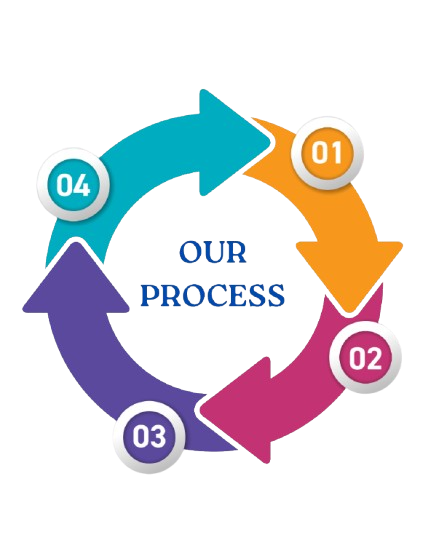
Our Process for Section 8 Registration
- Consultation & Documentation – We guide you through paperwork.
- DSC Approval
- Name Approval
- Documentation for Incorporation & Signatures
- Filing for Final Incorporation
- Approval & Certification – Get your Certificate of Incorporation.
- Post-Registration Support – Assistance in compliance & Bank Account Opening & other mandatory compliance
Section 8 Company Registration Fees & Cost
- Professional Fee: Based on the scope of incorporation and documentation required
- Government & Statutory Charges: As applicable to the incorporation and state
- DSC & Other Charges: Applicable depending on the number of proposed directors/signatories
Section 8 Company vs Trust vs Society
| Basis | Section 8 Company | Trust | Society |
|---|---|---|---|
| Legal Structure | • Non-profit company | • Charitable trust | • Membership-based non-profit organisation |
| Governing Framework | • Companies Act, 2013 | • Applicable trust laws | • Societies Registration Act, 1860 / applicable State law |
| Registration Authority | • Registrar of Companies (MCA) | • Relevant Sub-Registrar / authority | • Registrar of Societies |
| Governance | • Directors and members | • Trustees | • Governing body / managing committee |
| Compliance | • MCA, Income Tax and other applicable compliances | • Income Tax and applicable State/local compliances | • Income Tax and applicable Registrar/State compliances |
Can a Section 8 Company Apply for 12A & 80G Registration?
Yes. A Section 8 Company can apply for registration under Section 12AB and approval under Section 80G of the Income-tax Act, subject to the applicable conditions and approval of the Income Tax Department. Section 8 incorporation and 12AB/80G registration are separate processes. Section 8 establishes the non-profit company, while 12AB relates to income-tax exemption and 80G enables eligible donors to claim tax deduction on qualifying donations.
Can a Section 8 Company Receive CSR Funding?
A Section 8 Company may be eligible to undertake CSR activities and receive CSR funds from companies, subject to the eligibility conditions prescribed under the Companies Act, 2013 and the Companies (Corporate Social Responsibility Policy) Rules, 2014. Where applicable, the implementing entity is required to register with the Ministry of Corporate Affairs by filing Form CSR-1 and obtain a CSR Registration Number.
Annual Compliance for a Section 8 Company
- Books of Accounts & Financial Statements
- Statutory Audit
- Income Tax Return (ITR-7), where applicable
- AOC-4 Annual Financial Filing
- MGT-7 / MGT-7A, as applicable
- DIR-3 KYC for Directors, where applicable
- Form 10BD & Form 10BE, where applicable
- TDS, GST and other applicable compliances
Can a Section 8 Company earn profit?
Can a Section 8 Company receive donations?
Frequently Asked Questions
A Section 8 Company is a non-profit organisation registered under the Companies Act, 2013, with the objective of promoting charitable, educational, religious, or social causes — not for profit distribution.
Any group of individuals or an organisation with charitable objectives can register, provided there are at least two directors and two shareholders (who can be the same persons).
Registration provides legal recognition, better credibility with donors and government agencies, eligibility for tax exemptions, and limited liability protection for its members.
Typically, registration takes 15–25 working days, depending on document verification and approval from the Registrar of Companies.
Yes, it can earn income from legitimate activities, but profits must be used only for promoting the company’s objectives — not distributed to its members.
Once approved, it remains valid as long as annual compliances are met and the company continues to pursue its charitable objectives.